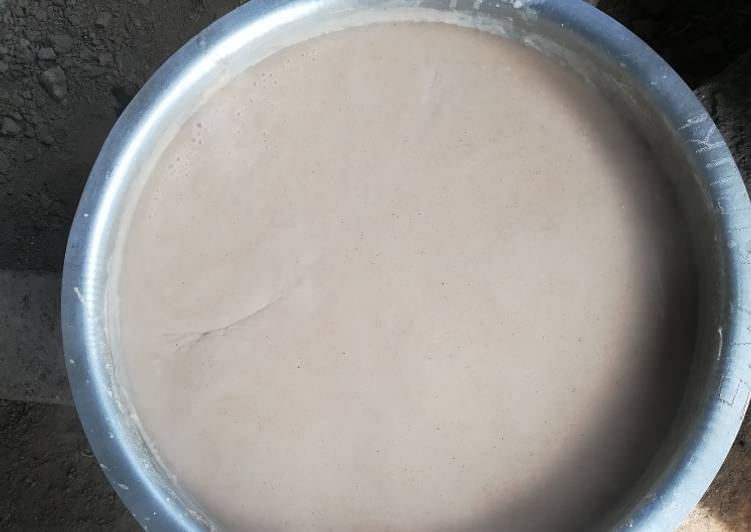
Hello everybody, I hope you are having an incredible day today. Today, I will show you a way to prepare a distinctive dish, fermented porridge. It is one of my favorites food recipes. This time, I’m gonna make it a little bit tasty. This is gonna smell and look delicious.
Our ancestors, and virtually all preindustrialized peoples, soaked or fermented their grains before making them into porridge, breads, cakes, and casseroles. Ragi: A fermented grain porridge from Indonesia made from rice flour. Koji: A Japanese fermented grain porridge made from glutinous rice. Fermented Oatmeal: If you read the food history of Ireland you will find oats at the forefront of their diet.
Fermented porridge is one of the most well liked of current trending meals on earth. It is simple, it is quick, it tastes yummy. It’s appreciated by millions every day. They are fine and they look wonderful. Fermented porridge is something that I’ve loved my entire life.
To get started with this particular recipe, we have to prepare a few ingredients. You can cook fermented porridge using 3 ingredients and 8 steps. Here is how you cook that.
The ingredients needed to make Fermented porridge:
- Prepare 1 1/2 kg Unga wa baridi
- Make ready 1/4 kg Wimbi
- Make ready 1/2 kg Mwere
Fermented starch, which is also endosperm of the oat groat, is very high in beta glucan, a polysaccharide that ' induces satiety, decreases glucose uptake, and insulin response, lowers cholesterol in the blood, and controls weight through prolonged satiety '. Add another ⅔ cup of dry grains to the Starter jar and top off with water (For tomorrow. This has been the case with a sourdough bread vs. a regular yeast bread and now with this porridge. Fermentation breaks down the hard to digest components of grains and tends to maximize the nutrients of whatever food is being fermented.
Instructions to make Fermented porridge:
- Heat 20 litres of water, sieve your flour
- Add the heated water in a bucket while at lukewarm temperature then add the flour & stir well with a wooden spoon
- Then cover with lid & store in a cool warm place for 2 to 3 days depending with the climate.. In hot areas store for 2 days
- Cook on the porridge in the 3rd or 4th day.
- 1kg of flour gives 15 to 20 litres of porridge..
- In a wide sufuria add the fermented water then add clean water to add up your measurements.
- Bring water to boil then add the fermented flour.. We cook it just like normal porridge stir well with the biggest wooden spoon u have. Bring to boil, let it cook for 40mins
- When ready store in a clean mtungi while still hot & enjoy your porridge for one or 2weeks.
This has been the case with a sourdough bread vs. a regular yeast bread and now with this porridge. Fermentation breaks down the hard to digest components of grains and tends to maximize the nutrients of whatever food is being fermented. Gĩkũyũ traditional porridge or gruel, ũcũrũ, was the main pillar for maintaining the healthy life of the Gĩkũyũ just as fermented milk was the main pillar for the pastoralist communities like the Maasai. Once its fermented (where it gets the sour taste as the good bacteria get to work- it shouldn't smell off bad at this point if it does something else has entered your ferment and you'll need to start again) you begin the process of "the syein o' the so'ons" that is we sieve the Sowans. McNeil suggests you "pour the contents of the bowie through a fine sye".
So that’s going to wrap it up with this special food fermented porridge recipe. Thanks so much for your time. I’m confident you will make this at home. There is gonna be interesting food in home recipes coming up. Don’t forget to bookmark this page in your browser, and share it to your loved ones, friends and colleague. Thanks again for reading. Go on get cooking!